
Brand Strategy vs. Branding: What You Actually Need Before Investing in a Website
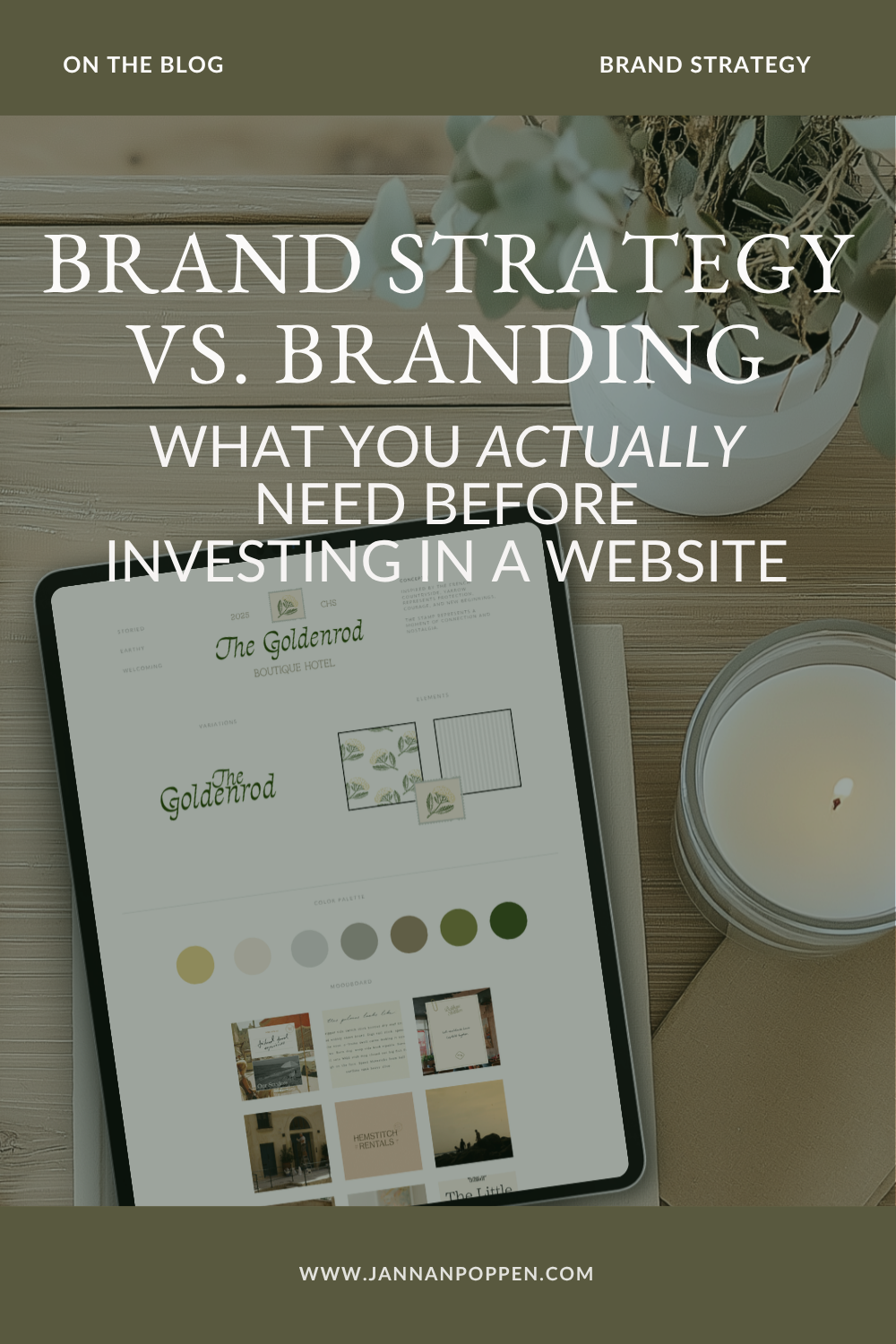
If you know your website needs work, it can be tempting to jump straight to the fun part: choosing colors, looking at layouts, saving website inspiration, and imagining what your new site could look like.
But before you invest thousands of dollars into a website redesign, there’s a more important question to answer: is your website actually the problem, or is it trying to communicate a brand that still feels unclear?
A beautiful website can absolutely change the way people experience your business. But design can’t fix fuzzy positioning, unclear messaging, or an offer that’s difficult to understand. That’s where brand strategy comes in.
And if you’ve ever Googled how to develop a brand strategy and immediately found yourself staring at a 47-step framework involving mission statements, competitor matrices, and enough worksheets to ruin your afternoon, don’t worry. It really doesn’t need to be that complicated.
At its core, brand strategy is about getting clear on who you are, who you’re trying to reach, what makes your business valuable, and what you want people to understand when they land on your website. Once that foundation is clear, branding and web design become a whole lot easier.
What Is Brand Strategy?
Brand strategy is the thinking underneath your brand. It helps you define who you’re trying to reach, what they care about, what problem you solve, why they should choose you, and what you want to be known for.
It also gives you a way to make decisions. Instead of choosing a direction because you saw something beautiful on Pinterest or because a competitor is doing it, you have a reason behind your choices.
Brand strategy gives your design something meaningful to communicate.
And that matters because your customers aren’t coming to your website simply to admire your font choices. They’re trying to figure out whether your business is for them, whether they trust you, whether you understand what they need, and whether taking the next step feels worth it.
Your strategy helps your brand answer those questions clearly.
What Is Branding?
Branding is how that strategy gets expressed.
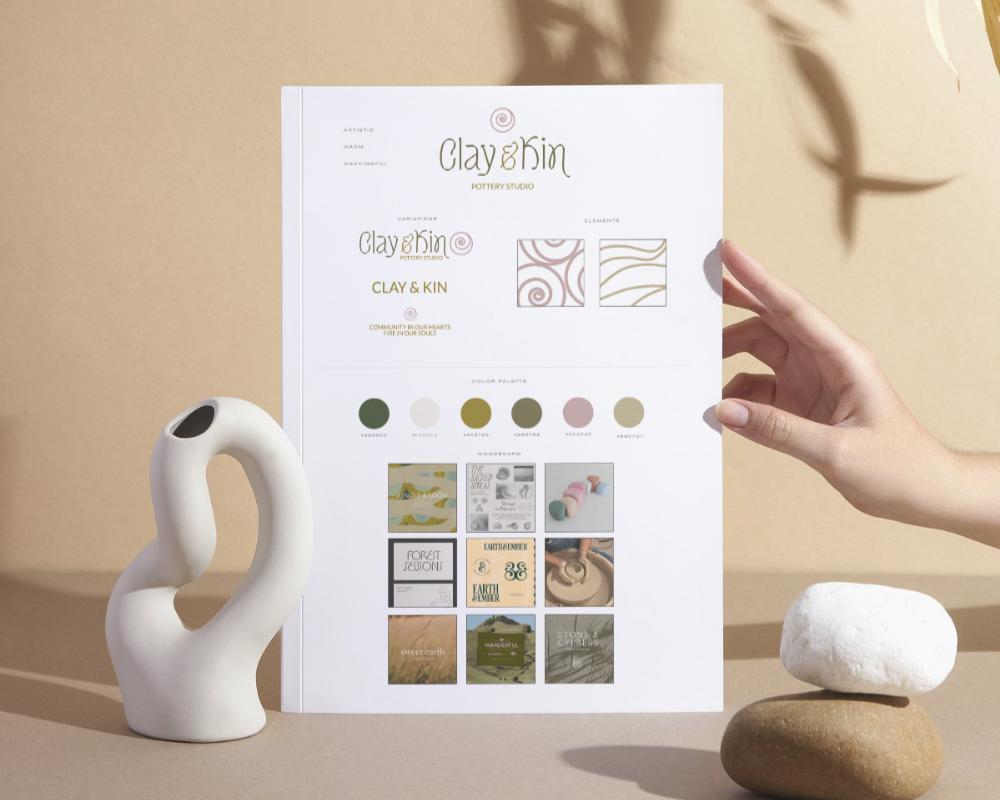
It includes things like your logo, typography, color palette, photography, graphic elements, messaging, tone of voice, and overall visual direction. These things matter a lot. Good branding can make your business feel more recognizable, polished, trustworthy, and aligned with the quality of the work you provide.
But branding works best when it’s rooted in something deeper than aesthetics.
You can have a gorgeous logo, beautifully curated colors, and stunning photography and still struggle to attract the right clients if people don’t understand what you offer or why it matters.
That’s the difference between simply looking good and communicating well.
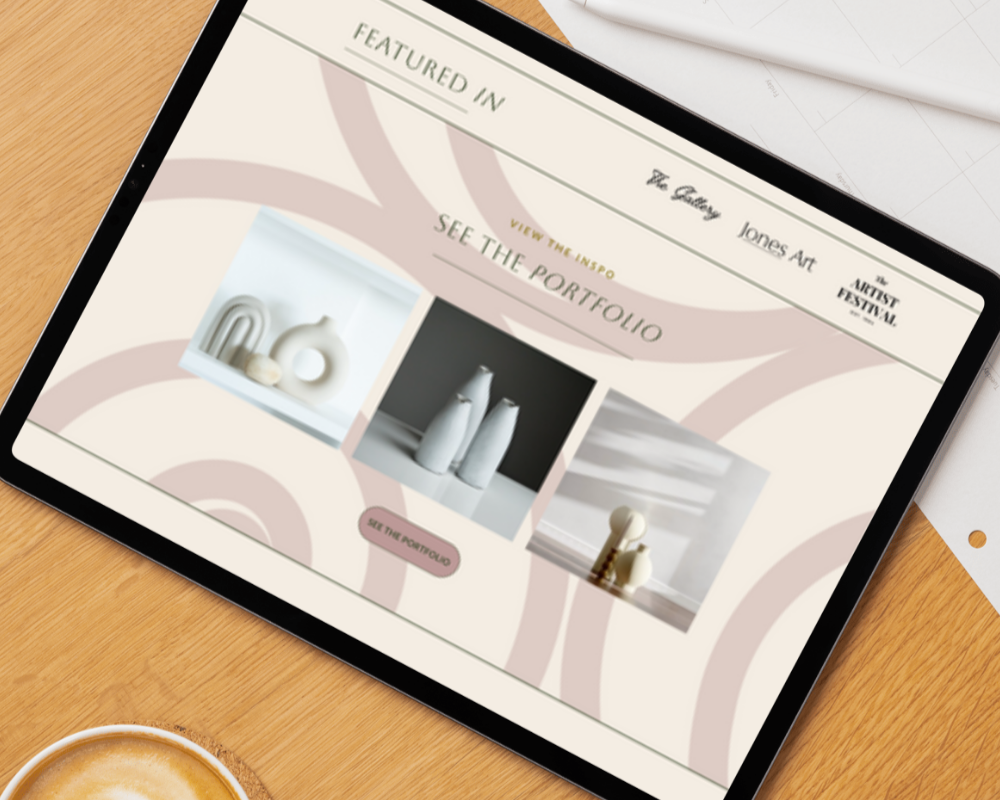
Brand Strategy vs. Branding: What’s the Difference?
The simplest way I think about it is this: strategy decides what you want to communicate. Branding decides how people experience it.
Imagine you’re building a wellness brand and, through your strategy work, you decide the business should feel grounded, knowledgeable, approachable, and calming without feeling overly clinical.
That’s strategy.
The warm photography, thoughtful typography, natural colors, conversational copy, and spacious website design that help communicate those qualities? That’s branding.
The two should work together. When they do, your brand feels intentional instead of pieced together.
How to Develop a Brand Strategy Before Designing Your Website
You do not need a massive strategy document before you can begin your website. But you do need clarity in a few key areas.
1. Get Clear on Your Ideal Customer
Your ideal customer is more than an age range, income level, or demographic. You need to understand what’s happening in their world.
What are they frustrated by? What do they want instead? What have they already tried? What are they worried about before investing? What would make them feel understood?
This is where human-centered brand strategy starts. You aren’t trying to manufacture the perfect customer avatar. You’re trying to understand the real person on the other side of the screen.
The better you understand them, the easier it becomes to create messaging and design that actually feels relevant.
2. Define the Problem You Want to Be Known for Solving
If someone landed on your website today, could they quickly understand what you help people do?
This sounds simple, but it’s one of the places I see businesses get stuck. They have multiple services, several audiences, lots of experience, and approximately 800 things they could talk about. So they try to communicate all of it.
The result is often a website that says a lot without making anything particularly clear.
Ask yourself: what is the main problem I want someone to associate with my business?
You can offer more than one service. You can be multi-passionate. You can grow and evolve. But your website still needs a clear center of gravity.
3. Clarify What Makes Your Approach Different
You do not need to invent a groundbreaking proprietary method called The Seven-Step Quantum Business Explosion™. Please don’t. We have enough of those.
Differentiation is often much simpler.
Maybe it’s the way you work with clients. Maybe it’s your background, your perspective, or the way you combine skills that are usually separated. Maybe your process feels calmer, more personal, more collaborative, or more strategic than the alternatives.
You’re looking for the things that make working with you feel distinctly like working with you.
Those details become some of the strongest material for your messaging and website.
4. Decide How You Want Your Brand to Feel
This is where strategy starts informing design.
Skip generic words like “professional” or “high-quality.” Almost every business wants those things. Get more specific.
Maybe your brand should feel grounded, editorial, warm, artistic, refined, playful, confident, unexpected, or approachable.
These qualities become filters for your design decisions. Does this color palette feel grounded? Does this photography feel warm? Does this typography feel refined or too formal?
Suddenly, you’re no longer choosing things because you simply “like” them. You’re choosing them because they support the larger brand.
5. Get Your Core Messaging Straight
Before you start obsessing over homepage layouts, make sure you know what you do, who you do it for, why it matters, what makes your approach valuable, and what action you want someone to take next.
Your website should not make visitors solve a puzzle. They shouldn’t need to scroll halfway down your homepage before realizing what you actually sell.
Clarity is part of the customer experience.
And when your core message is strong, design can amplify it instead of trying to rescue it.
What Happens If You Skip Brand Strategy?
Usually, nothing explodes. It’s subtler than that.
You redesign your website and love it for three months. Then something starts feeling off. You change the homepage copy, then the colors, then the fonts, then your offer language, and eventually you start wondering whether you need another redesign.
Or maybe you keep attracting inquiries that aren’t quite right. Maybe you struggle to explain what makes you different. Maybe your brand looks polished, but it still doesn’t quite feel like you. Maybe you keep tweaking your website because you can sense that something isn’t working, but you can’t figure out what.
Often, the design isn’t really the problem.
The design simply doesn’t have a clear enough strategy to anchor it.
Do You Need Brand Strategy Before Hiring a Web Designer?
You need clarity, but you do not need to have every answer figured out before you hire someone.
In fact, a good web design process should help you sharpen some of these decisions.
Before investing in a website, though, you should have at least some understanding of your audience, your offers, your positioning, your message, your visual direction, and the primary goal of the site.
If those things still feel fuzzy, look for a designer who approaches web design strategically rather than treating the project as purely visual.
Because the goal isn’t simply to make your existing content prettier. The goal is to build a website that helps people understand your value and confidently take the next step.
What If You Already Have Branding?
You may not need to start over.
Sometimes your visual identity is perfectly good, but the business underneath it has changed. Maybe your services have evolved, your audience has shifted, your pricing has increased, or your business has simply matured.
In those cases, you might need a strategic refresh rather than a completely new brand.
The important question isn’t, “Is my branding old?”
It’s, “Does my current brand still accurately communicate where my business is going?”
If the answer is yes, keep what’s working. If not, that’s your cue to refine.
What Should Come First: Strategy, Branding, or Website Design?
In an ideal world, the process starts with strategy. You clarify your audience, positioning, message, offers, and business goals.
Then branding translates that strategy into a visual and verbal identity.
Then website design brings everything together into an experience that helps people understand what you do and guides them toward action.
But these don’t always need to be three giant standalone projects. For many small businesses, strategy, branding, and web design naturally overlap.
What matters is that the thinking happens before the pixels.
You don’t want to spend thousands of dollars building a beautiful website only to realize six months later that the real issue was never the layout.
Build the Foundation Before You Redesign
You do not need a perfectly polished brand strategy before you hire a web designer. You do need enough clarity that your website has something meaningful to say.
A strong website should do more than look beautiful. It should help the right people recognize themselves in your message, understand why your work matters, and know exactly what to do next.
And that starts before the design phase.
If your business has outgrown your current website but you’re not sure whether the problem is your branding, messaging, strategy, or the site itself, that’s exactly where I like to begin.
My brand and website projects combine strategy and design so we’re not simply making things prettier. We’re making them clearer, more intentional, and more useful to the people you actually want to reach.
If your brand or website feels like it’s no longer keeping up with where your business is headed, let’s fix the foundation first. Explore my brand and web design services, and let’s create something that feels clear, strategic, and built to help the right people say, “yes, this is exactly what I’ve been looking for.”


Hi! I’m Jannan
I thrive on bringing your big ideas to life with simple, client-getting strategy at the forefront.
My clients are wildly passionate and courageous coaches, creatives, and thought leaders. Sound like you? You’ll be right at home here.